Shirt production · worldwide

Automation Solutions for Shirt Production

Collar, cuff and placket pressing, label attaching, buttonholing, button sewing, folding and finishing machines for shirt factories. Shop the machines below, or tell us the operation that limits your line — we propose the automation that fits it.

Shop shirt sewing automation ↓

Operations covered: Fusing · Collars · Cuffs · Plackets · Labels · Sleeves · Buttonholes · Buttons · Thread cleaning · Folding

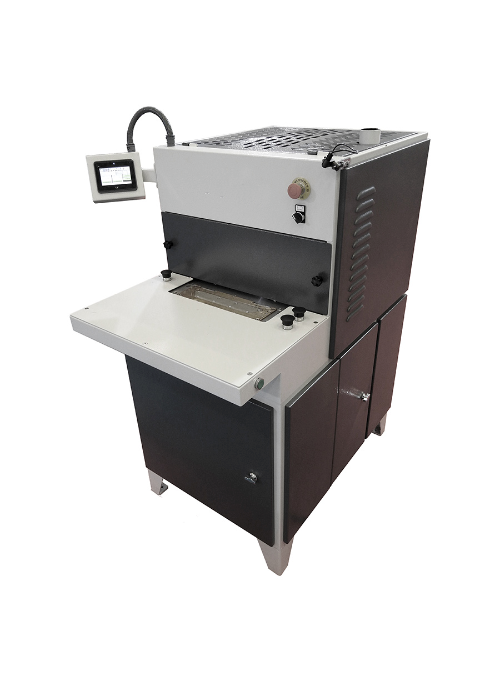
Shirt front placket pressing and creasing machine
Front placket pressing & creasing machine — view machine
Shop

Machines for shirt production

Automatic sewing, forming and pressing units for shirt and uniform-shirt lines — collar, cuff and placket work, label attaching, feed-off-the-arm sewing, buttonholing, button sewing and folding.

  • Automats for the repetitive shirt operations: collars, cuffs, plackets, labels, buttons
  • Forming and pressing units that hold shape and size across the line
  • Configuration, lead time and price confirmed by quotation
  • Parts support after installation

Find your operation

Automation by operation

Shirt automation, operation by operation

Listed in the order a shirt is usually prepared, sewn and finished. Every machine shown is in our catalog — open it for details, or ask about the operation directly.

Step 01

Interlining fusing

What it does
Bonds interlining to collars, cuffs, plackets and other shirt parts with controlled heat and pressure.
Why it helps
Uniform temperature and pressure give the same bond on every part. The listing states that the shock-processing method is designed to avoid shrinkage or discoloration on the fabric.
Ask about this operation →
Step 02

Collar trimming & turning

What it does
Trims the collar seam allowance and collar points to the collar shape, then turns the points before pressing.
Why it helps
Trimming follows a set collar shape, so collars are trimmed the same way every time. Air blowing on the point trimmer clears fabric residue from the blades.
Ask about this operation →
Step 03

Collar forming, pressing & marking

What it does
Presses collars on heated moulds — independent left and right point ironing, single, double or round-profile moulds — and marks collars at three points for assembly.
Why it helps
Heat and pressing time are set on the machine and moulds are interchangeable, so collar shape stays the same across sizes and models. Three-point marking keeps collar assembly standard.
Ask about this operation →
Step 05

Front & sleeve plackets

What it does
Folds, presses and stacks front plackets (fold width 1–8 cm, interlining can be pressed at the same time) and sleeve plackets or bias tape, with laser-line positioning.
Why it helps
Fold width and pressing are set on the machine, so plackets come out the same on every shirt. Automatic transfer to the stacking station reduces handling defects.
Ask about this operation →
Step 06

Label attaching

What it does
Sews brand, quality and size labels from a stored program — one label or several labels in the same cycle.
Why it helps
Label position and stitch pattern repeat from the program. One unit also cuts labels ultrasonically and feeds them automatically from the roll.
Ask about this operation →
Step 09

Button & buttonhole marking, buttonholing

What it does
Marks button and buttonhole positions with pins or hot stamping, then sews straight buttonholes on light and medium fabrics.
Why it helps
Standard marking keeps button spacing the same on every shirt front, and the computerized buttonhole machine repeats each buttonhole from its program.
Ask about this operation →
Step 10

Button sewing & wrapping

What it does
Automatic button sewing, followed by thread wrapping and knotting under the button.
Why it helps
Automatic button sewing raises output — the listing states up to 15,000 buttons per 8-hour shift. Wrapping and knotting make buttons more secure in use.
Ask about this operation →
Step 12

Folding & packing

What it does
Folds shirts to standard dimensions on exchangeable fixtures, with vapour ironing on selected models.
Why it helps
Fold size is set by the fixture, so every shirt is folded and packed the same way. The vapour-press model has an illuminated button channel to keep the front straight.
Ask about this operation →
Featured machines

Strongest shirt automation solutions

A short selection. Configuration, lead time and price are confirmed by quotation.

Front placket

Front Placket Pressing & Creasing

Folds, presses and stacks the shirt front placket in one cycle; fold width from 1 cm to 8 cm, and interlining can be pressed at the same time.

Laser-line positioning and automatic stacking; one operator runs the machine.
As stated in the machine's product listing.
Sleeve plackets

Sleeve Placket Pressing

PLC-controlled pressing of sleeve plackets and bias tape, with automatic transfer to the stacking station.

Listed capacity: 3,000 pcs per shift.
Capacity as stated in the machine's product listing.
Collars

Collar Forming Machine

Independent, angled left and right ironing areas for consistent collar points; pneumatic hold without a holder system, so no holder marks.

Listed capacity: about 2,500 collars per 8 hours.
Capacity as stated in the machine's product listing.
Machine demonstrations

See the machines running

Real machine videos from the Empenzo Americas channel. For the other shirt machines, ask us for a video of the machine you are considering.

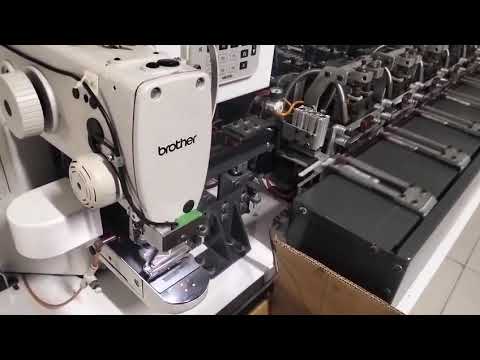
Automatic label attaching machine — full operation demo

View this machine →

Automatic label sewing with label cutting & feeding system

View this machine →

More machine videos on our YouTube channel

Consultation

Tell us what shirt operation you want to automate

A few details about your line are enough to start. Factories in any country can send them — we review them and come back with suitable machines, options and next steps.

  1. 01Garment type (dress shirt, casual shirt, uniform or work shirt…)
  2. 02The operation you want to automate
  3. 03Current machine or process
  4. 04Current manpower on that operation
  5. 05Current output per shift
  6. 06Target output per shift

If you can, attach a short video of the current operation and photos of the garment. A video from the line shows us the operation faster than any description.

Send your operation details

Email opens with the questions filled in, and you can attach videos and photos. On a phone, WhatsApp is often easiest.

WhatsApp +65 8648 7774Singapore HQ · international — videos and photos welcome
Bangladesh office +880 1771-217302Empenzo Bangladesh Ltd., Uttara, Dhaka
United States +1 (770) 744-3831Mon–Fri, 8:00 AM – 5:00 PM ET · call or text
Why Empenzo

An automation partner, not only a machine seller

Machines and automation for garment lines

Industrial sewing machines and automated units for jeans, shirts, knitwear, underwear and uniform production.

We start from the operation

We look at the operation you want to improve and propose the machine, jig or feeding system that fits your line — not just a catalog item.

Pressing and sewing from one supplier

Pressing machines for collars, cuffs and plackets alongside sewing automats for labels, buttons and epaulettes — preparation, sewing and finishing covered together.

Parts support after installation

More than 300,000 industrial sewing parts are listed in our catalog, so machines stay supported in production.

Present where garments are made

Offices in Singapore, Bangladesh and the United States, working with garment manufacturers that produce for export markets.

Empenzo offices: Singapore (HQ) · Bangladesh (Dhaka) · United States (Cumming, Georgia)

Next step

Planning a shirt automation project?

Send us the shirt operation you want to automate. We will review it and suggest the machines, moulds or fixtures that fit your line.

order@empenzo.com · +880 1771-217302 · WhatsApp +65 8648 7774 · +1 (770) 744-3831

Full collection

All 27 shirt sewing automation machines

Filter and sort the complete collection. Open any machine for details, or request a quote.

27 Products